Wheeled Humanoid Robots vs Legs: Why the Best Home Humanoid Doesn't Walk
The question nobody at the keynotes asks
Watch any humanoid robot demo from the last two years and you'll see the same thing: a machine walking slowly across a flat, empty stage while a handler stands within catching distance. Walking is impressive. It's also the single most expensive, power-hungry and fragile way to move around a home.
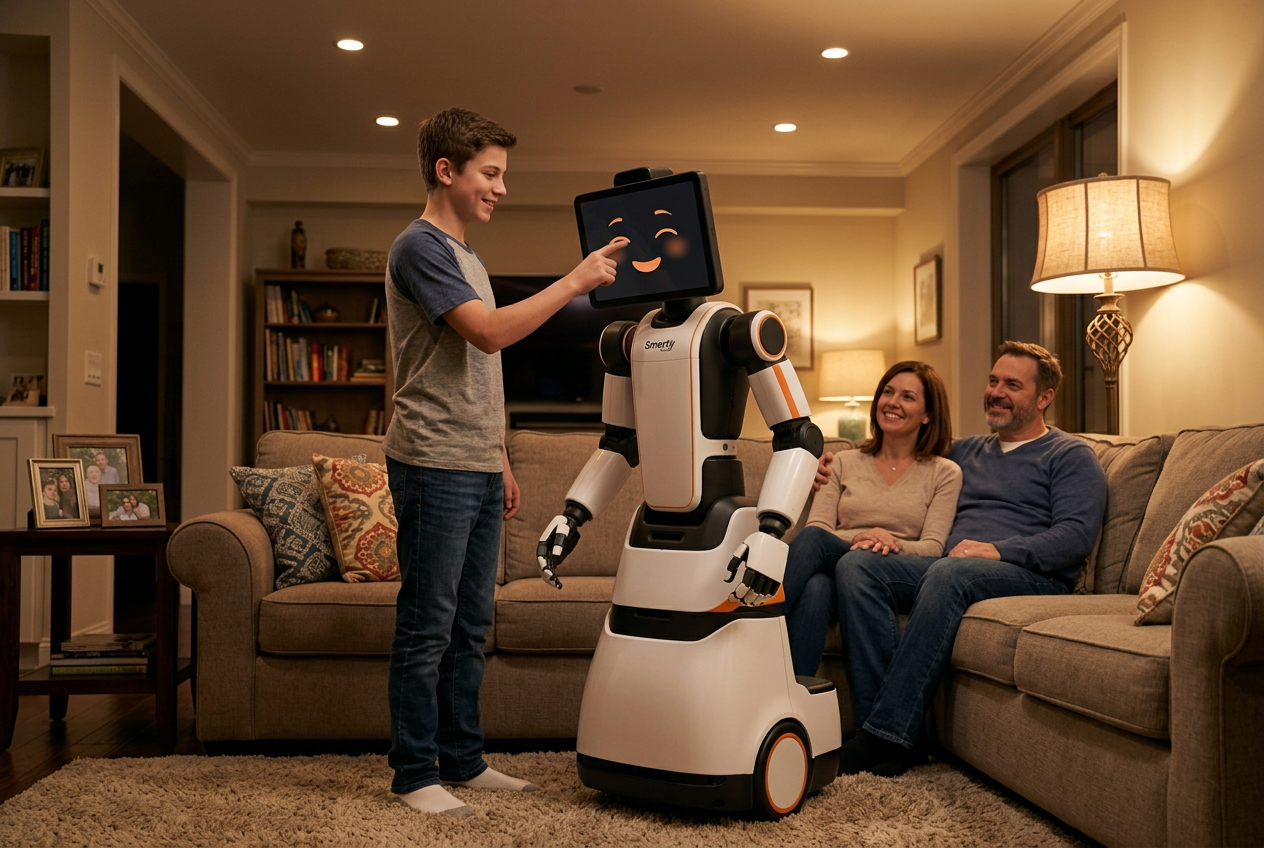
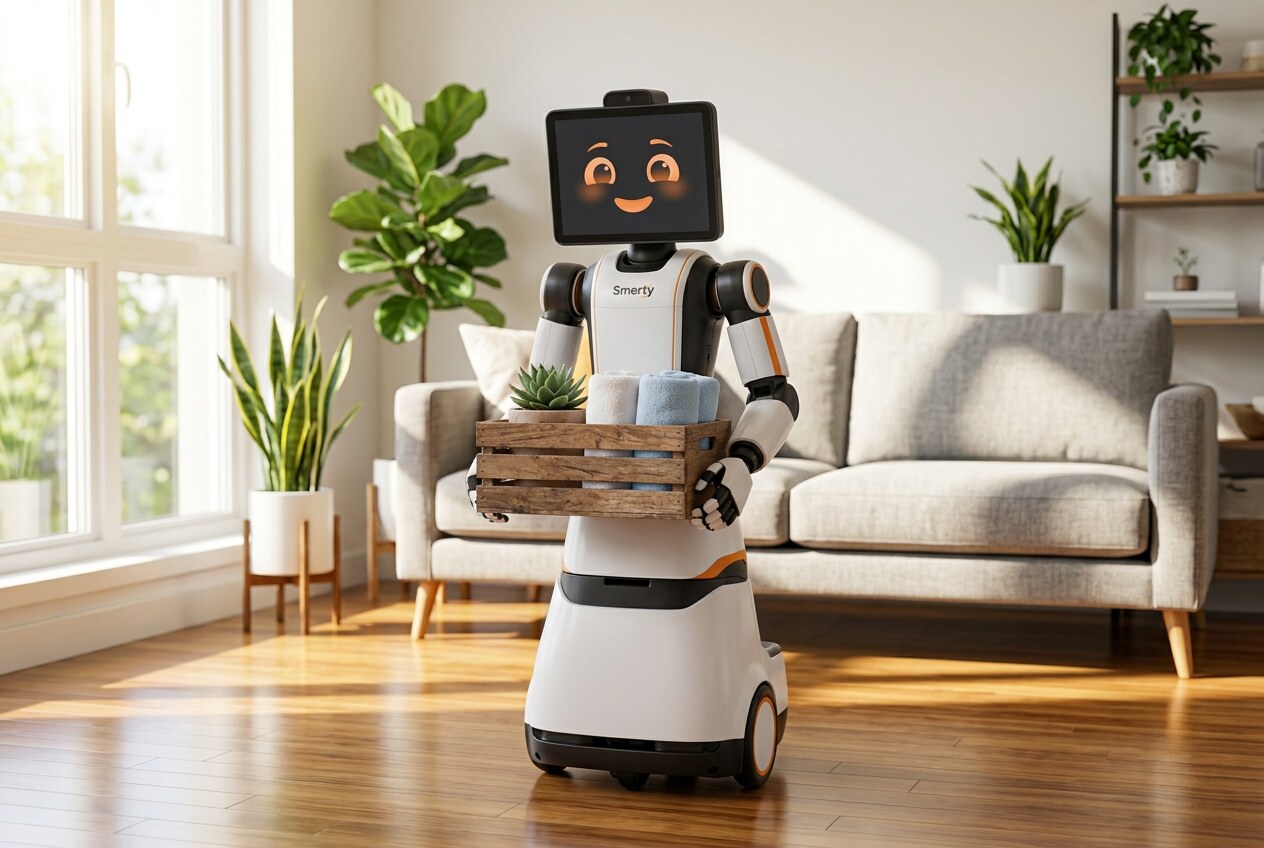
A wheeled humanoid robot keeps everything that makes a humanoid useful — a torso at human height, two arms, dexterous hands, a face you can talk to — and replaces the one part that doesn't earn its keep in a living room: the legs.
This is the design decision behind Smerty, our home companion, and this article is the honest engineering case for it.
What legs actually cost you
Legged locomotion is a solved problem in research labs and an unsolved one in your hallway. Here's what two legs demand:
- Power. A walking humanoid spends a large share of its battery just staying upright and balancing. That's energy that never reaches the arms, the cameras or the computer. A wheeled base rolls at a fraction of the power, which is why a wheeled humanoid can run all day and a walking one measures useful work in hours.
- Payload. Every kilogram of leg actuator is a kilogram you're not carrying. Dynamic balance also forces walking humanoids to keep loads light and close to the body — lean too far with a heavy box and the machine must choose between dropping it and falling.
- Price. Two legs mean dozens of high-torque actuators, harmonic drives and force sensors, plus the control software to keep them from destroying themselves. That bill of materials lands in the price tag.
- Safety. A 70–90 kg machine that balances dynamically can fall. Around children, grandparents and pets, "it almost never falls" is not a safety case. A low, ballasted wheeled base is statically stable: it doesn't need software to avoid falling over, any more than a fridge does.
- Noise and floors. Footsteps on wood or tile, every step, all day. Wheels with soft non-marking tyres are close to silent and kind to the floor.
"But stairs!" — the honest answer
The one real argument for legs is stairs. Our answer is honest: Smerty doesn't climb stairs, and most daily life doesn't need it to. In single-floor homes, apartments and care facilities — where most people who need a helping hand actually live — stairs never come up. Where they do, the practical solutions are the ones buildings already use: ramps, lifts, or one unit per floor, which two reasonably priced machines make possible where one legged machine costs more than both.
Designing the entire machine around the 2% of moments that involve stairs — and paying for it in the 98% that don't — is how you get a US$100,000 science project instead of a home appliance.
What you gain when you stop walking
Remove the legs and the same budget buys capability you'll use every day:
- Real payload. Smerty handles up to 25 kg, and Smerty+ up to 50 kg with both hands together — a full laundry basket, a stack of plates, the weekly shop. That's the point of having arms.
- All-day operation. A 100 kg ballasted base carries a battery sized for a full day, and the machine self-docks to charge in a corner of a storeroom.
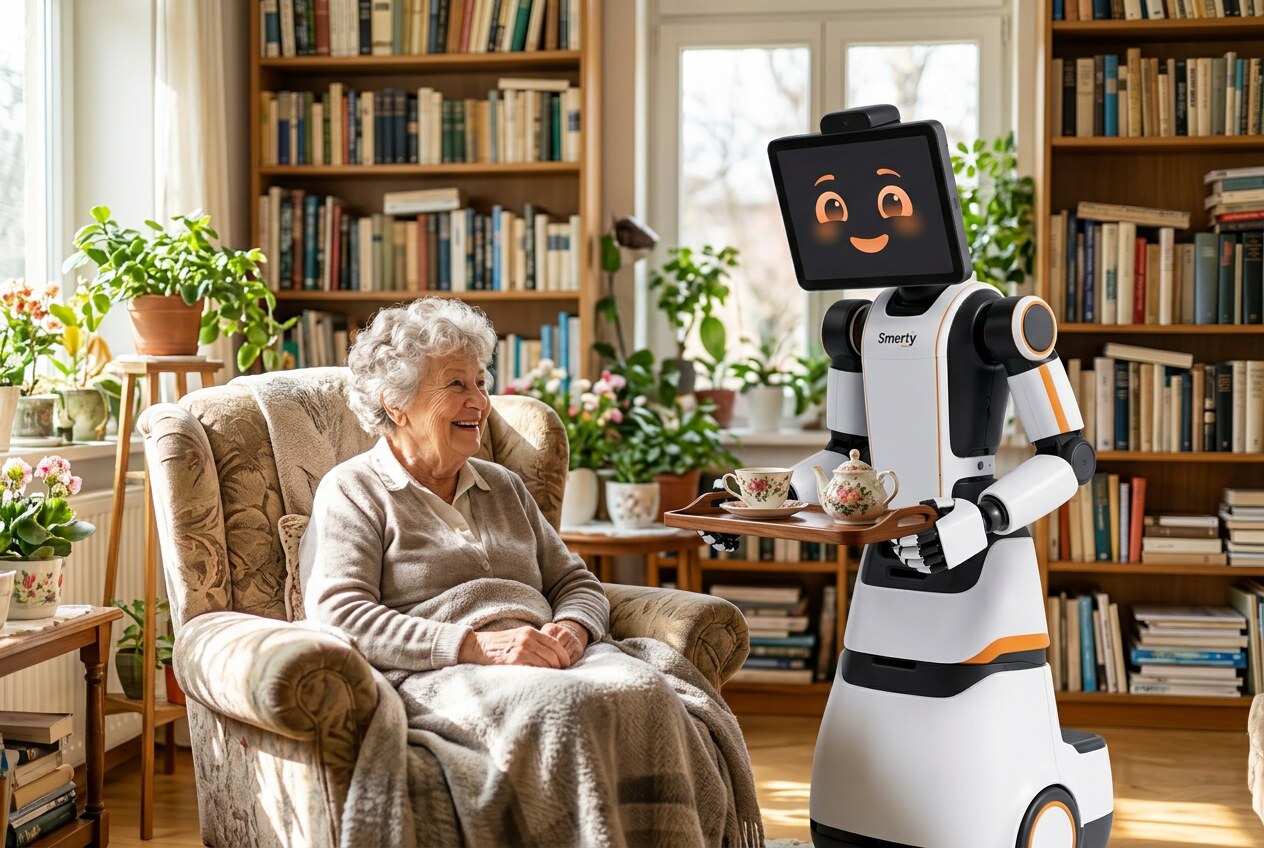
- Stability you can lean on. Literally: one adult at a time can lean on Smerty for support while it accompanies them to the bathroom at 3 a.m. A balancing biped cannot offer that.
- A face that works. Because the head doesn't need to house balance hardware, it can be a 14-inch screen: expressions, video calls with family, messages, reminders, and a telepresence window that lets an authorised relative or carer look in and even take over with named, speed-capped movements.
The market is quietly agreeing
Look past the keynote videos at what logistics and healthcare pilots actually deploy: wheeled platforms with arms. Hospitals, hotels and warehouses chose wheels years ago for the same reasons homes will — reliability, cost per hour, and safety cases a regulator can sign. The walking humanoid is a magnificent research vehicle. The wheeled humanoid robot is the product.
Where Smerty stands
Smerty is in pilot development, with first deliveries planned for March 2027 and a final design that may vary from what we show today. Two versions share the same body, sensors and AI: Smerty at US$9,999 plus taxes (up to 25 kg) and Smerty+ at US$19,999 plus taxes (up to 50 kg with both hands). Reservations are a fully refundable 10% deposit, with buy-now-pay-later instalments and an all-inclusive Smerty as a Service plan at US$1,999/month over 36 months for families who prefer one monthly fee.
If you're comparing home humanoids, ask every vendor four questions: What does it carry? How long does it run? What happens when it loses balance? And what does the face actually do? Then come and see our answers.
Transform Your Business with SMERT Robotics
Ready to experience the benefits of hospitality automation? Our team is ready to help you get started.